Lab grown and natural diamonds may look identical, but their story, value, and rarity couldn’t be more different. Discover what truly sets them apart before making your choice.
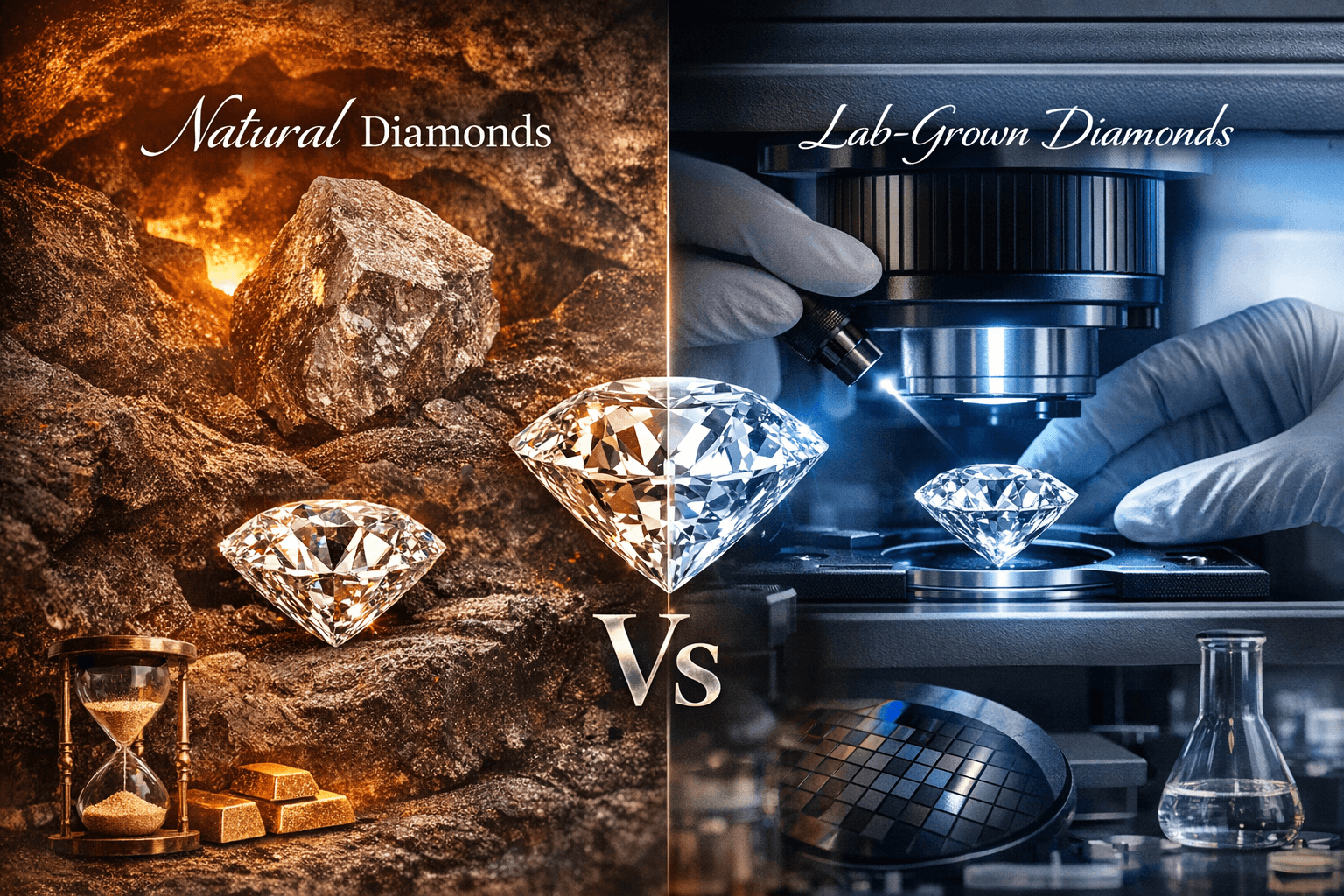
Lab Grown vs Natural Diamonds: What You Really Need to Know Before You Buy
When buying a diamond, you’re not just choosing a stone - you’re choosing a story, a value, and a legacy. One of the biggest questions today is: lab grown (man made) vs natural diamonds. And while they may look identical at first glance, the difference goes far beyond appearance.
The Origin: Billions of Years vs Modern Technology
Natural diamonds are formed deep within the Earth over billions of years. Each stone is a result of extreme pressure, time, and nature - making it truly one of a kind.
That rarity is what gives natural diamonds their emotional weight. They are not just beautiful - they are irreplaceable.
Lab grown diamonds, on the other hand, are created in controlled environments using advanced technology. They replicate the exact same structure.
In fact, from a scientific point of view, they are chemically, physically, and optically identical to natural diamonds.
The difference lies purely in their origin.
Appearance: Can You Actually See the Difference?
Visually, there is no difference between a lab grown and a natural diamond.
Both reflect light in the same way, have the same brilliance and fire, and are graded using the same standards.
Even trained professionals cannot distinguish them without specialized equipment. That’s why diamonds are graded at official institutes such as the Gemological Institute of America and the International Gemological Institute to ensure accuracy and authenticity.
This means that when it comes to how a diamond looks when worn, both options deliver the same stunning result.
Value and Reality: Jewellery Is Not an Investment
When purchasing fine jewellery, it’s important to understand one key truth:
a piece of jewellery should not be seen purely as an investment.
The value of a jewel goes far beyond the diamond itself. You are not only paying for the stone, but also for the craftsmanship, design, setting, brand, and the expertise required to create the piece. This added value is what makes jewellery special, but it also means that resale value works differently than many expect.
Whether a diamond is natural or lab grown, both will typically sell for less on the secondary market than their original retail price. This is simply because retail pricing includes margins and craftsmanship that are not recovered when reselling.
That said, there is a practical difference to consider.
Because lab grown diamonds are more accessible in price, the financial loss upon resale is generally lower. With natural diamonds, the initial purchase price is often significantly higher, meaning the absolute loss can also be greater when reselling the piece.
This doesn’t make one option better than the other - it simply reflects how pricing structures work in fine jewellery.
What Actually Determines Diamond Value
If your goal is to understand the true value of a diamond itself, the most important factor is not whether it is lab grown or natural, but how it is graded.
Its beauty ultimately comes down to the 4C’s:
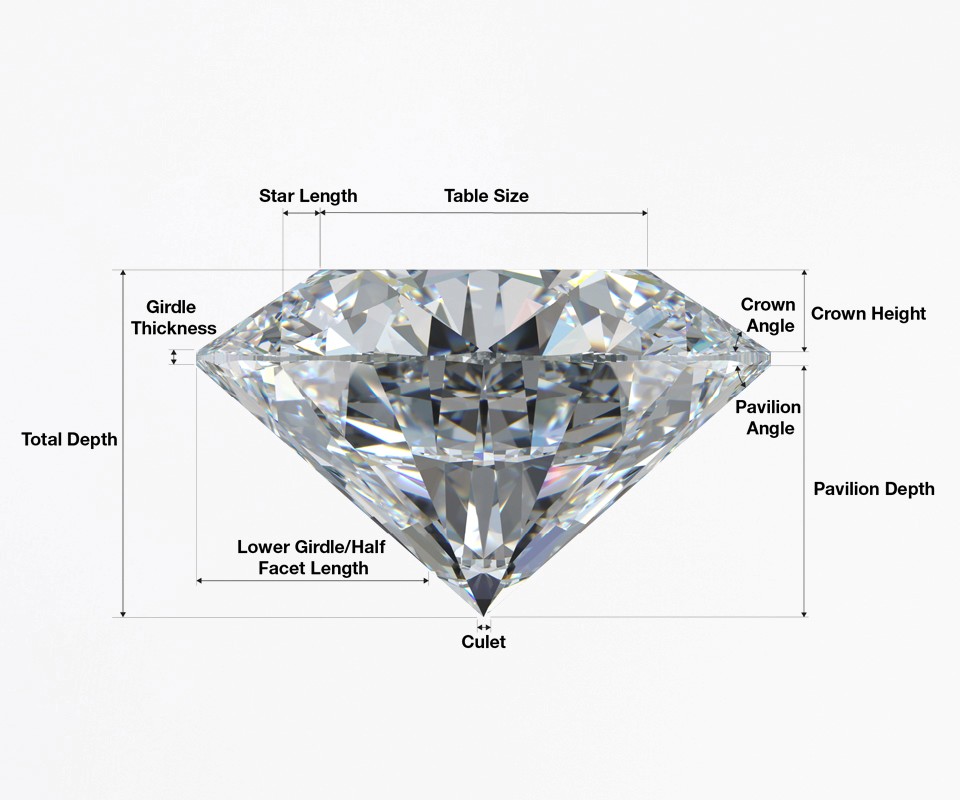
• cut
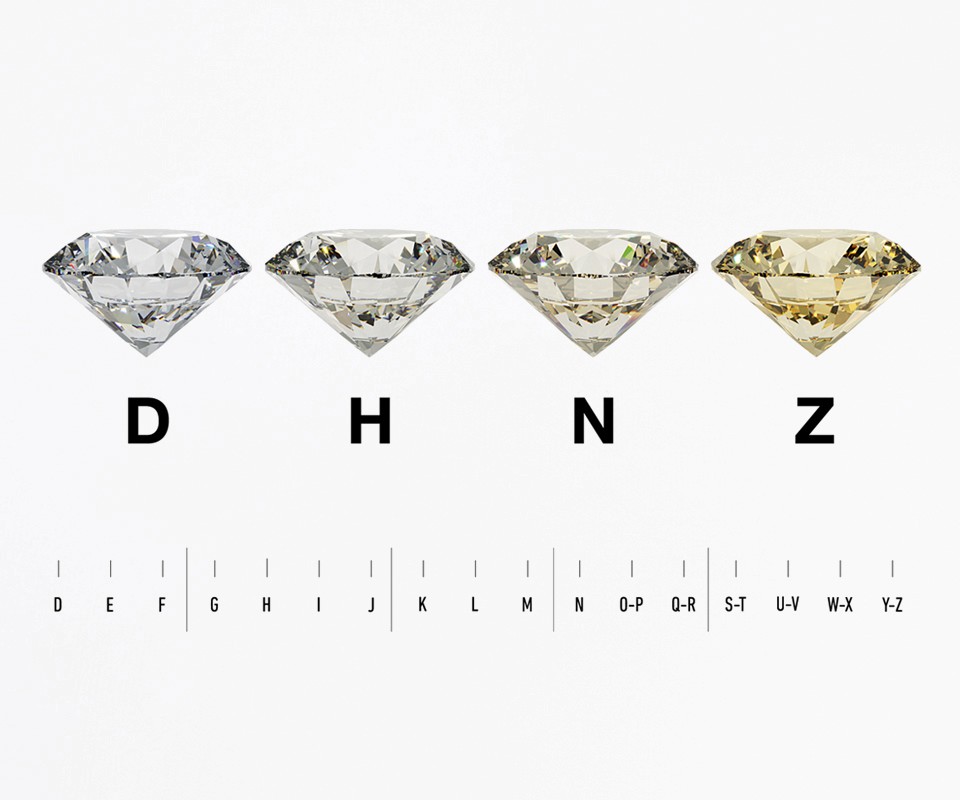
• color
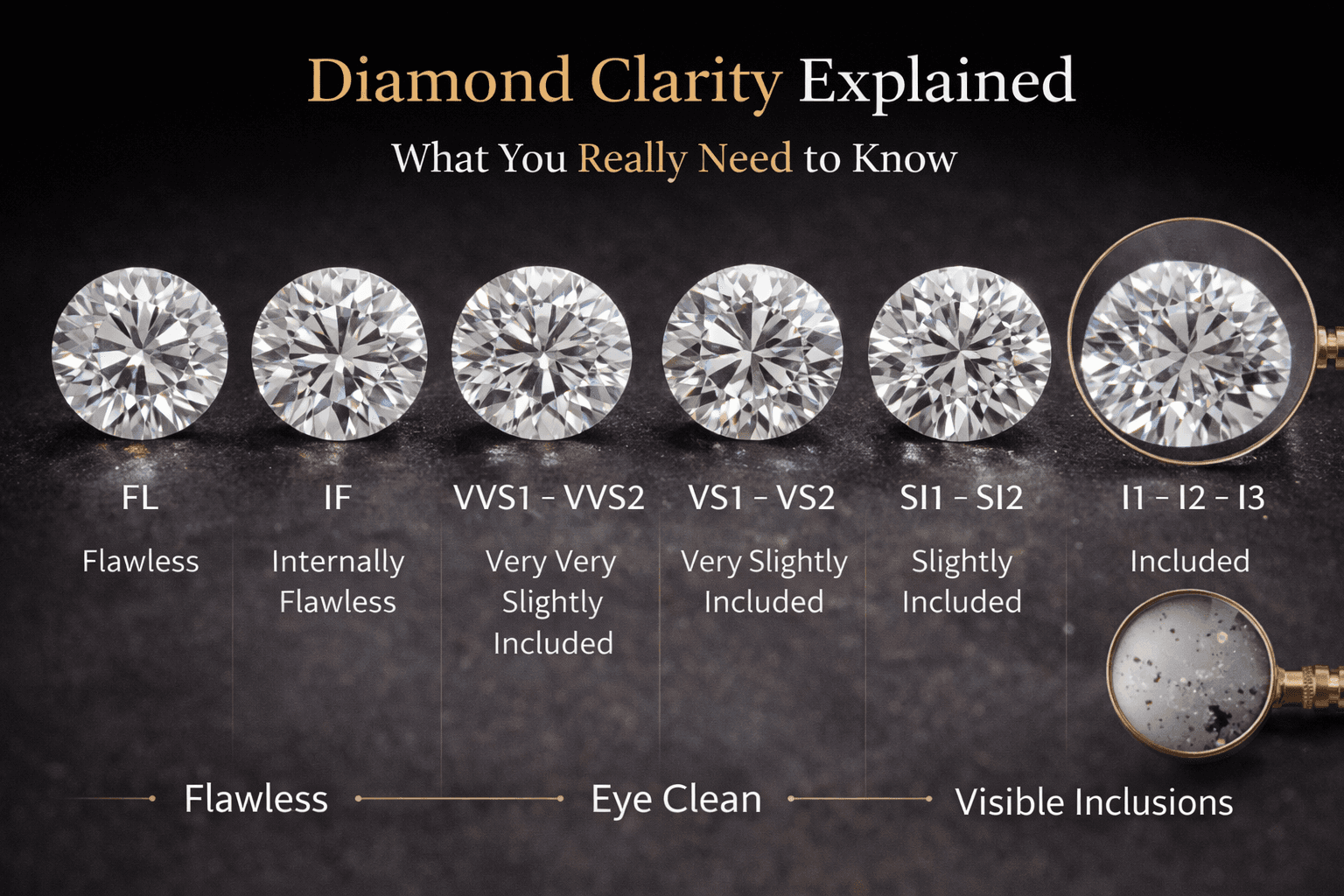
• clarity
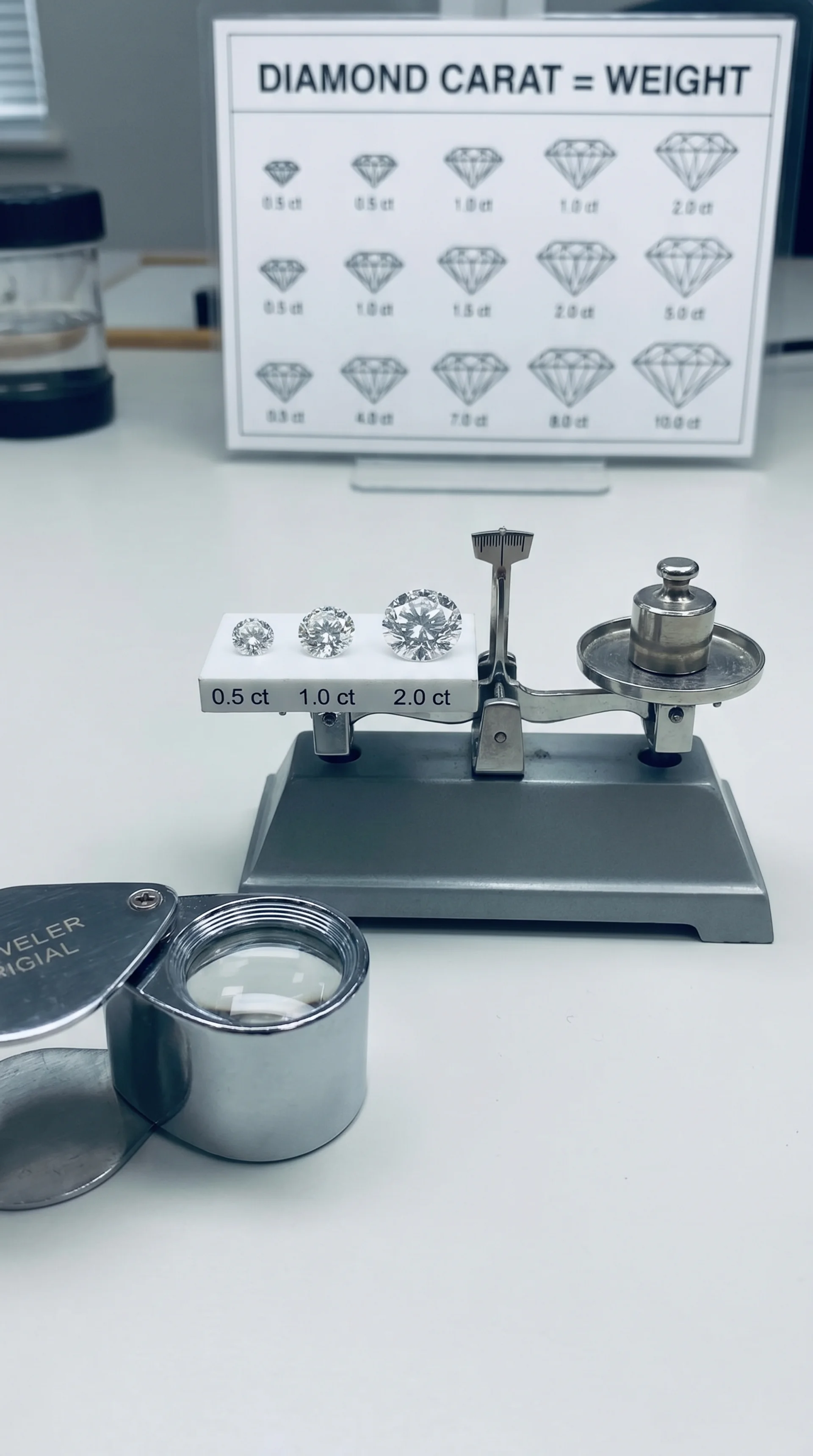
• carat
These factors determine how the diamond looks, shines, and feels when worn.
Want to understand how diamonds are graded? Read our complete guide on the 4C’s of diamonds.
Every diamond - natural or lab grown - is graded according to these same standards, often by institutes such as the Gemological Institute of America or the International Gemological Institute. This means that both types can range from lower to exceptional quality; there are “better” and “lesser” stones in both categories.
With lab-grown diamonds, the process itself is controlled but not perfectly predictable - so you can’t simply choose the exact outcome of quality beforehand. However, because the growth process is much faster than in nature, producers can repeat it multiple times, allowing for a wider availability of high-quality stones.
The Right Perspective
Ultimately, jewellery should be purchased for what it truly represents:
craftsmanship
emotion
personal meaning
Not purely for financial return.
Whether you choose lab grown or natural, the real value lies in the piece itself - and the story it carries with you.
Perspective
Where the difference becomes more noticeable is in how people perceive value.
Natural diamonds are often associated with:
· rarity
· tradition
· long-term symbolism
Natural diamonds, due to their rarity, do tend to retain value over time. However, when purchased as part of a finished piece of jewellery, it is important not to expect the same price in return upon resale. This is because the original price includes craftsmanship, design, and retail margins that are not recovered in the secondary market.
Lab grown diamonds are associated with:
· innovation
· accessibility
· modern craftsmanship
Neither is “better” - they simply represent different priorities.
Freedom of Choice
One of the biggest advantages of lab grown diamonds is flexibility.
Because they are more accessible, clients often have the freedom to choose:
· a way larger carat
· higher clarity
· better color
In other words, you can get a higher-quality and larger diamond for the same budget.
Natural diamonds, on the other hand, offer a sense of uniqueness that comes from their natural origin.
Final Thought
Today, choosing between lab grown and natural diamonds is less about right or wrong - and more about personal preference.
Do you value:
· origin and rarity?
or
· innovation and flexibility?
Both options offer real diamonds.
Both offer beauty.
The choice is simply about what matters most to you.